Archives
-
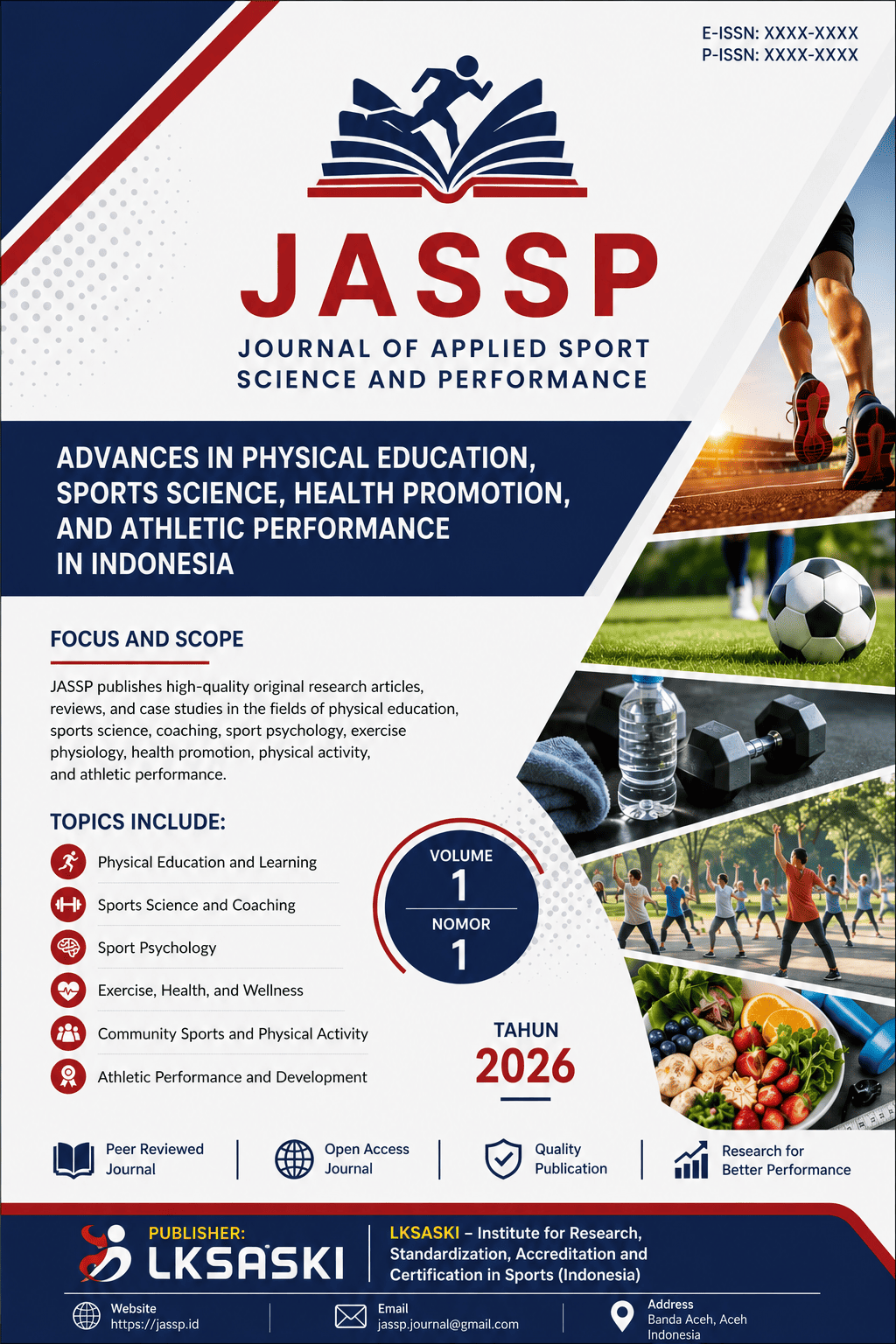
Advances in Physical Education, Sports Science, Health Promotion, and Athletic Performance in Indonesia
Vol. 1 No. 1 (2026)Physical education, sports science, health promotion, and athletic performance have become increasingly important in supporting the development of healthy, active, and productive communities. As Indonesia continues to strengthen its national sports system and public health initiatives, evidence-based research is essential to improve educational practices, athlete development, community participation in physical activity, and disease prevention through exercise. This Special Issue presents recent scientific contributions that address these challenges from multidisciplinary perspectives within the fields of physical education, sports science, exercise physiology, sport psychology, coaching science, and health promotion.
The articles published in this issue provide comprehensive insights into various aspects of sports and health research conducted across educational institutions, sports organizations, healthcare facilities, and community settings in Indonesia. The studies investigate school-based physical fitness, nutritional status and physical conditioning of student-athletes, teacher effectiveness in physical education, public participation in physical activity, cardiorespiratory fitness among elite athletes, dominant physical performance components, psychological readiness in competitive sports, implementation of healthy lifestyle behaviors in schools, and the therapeutic role of exercise in managing chronic diseases such as Type 2 Diabetes Mellitus.
A major strength of this Special Issue is its integration of educational, physiological, psychological, and public health perspectives. The findings demonstrate that improving physical fitness and athletic performance requires not only scientifically designed training programs but also effective educational strategies, supportive environments, healthy behavioral practices, proper nutrition, psychological preparedness, and community engagement. These multidisciplinary approaches contribute to the development of sustainable sports participation and lifelong healthy lifestyles.
Furthermore, the studies emphasize the importance of standardized physical fitness assessment, evidence-based coaching, school health promotion, and exercise interventions as strategic components for enhancing human performance and public health. The findings also provide valuable baseline data for policymakers, educational institutions, coaches, sports organizations, and healthcare professionals in designing targeted programs that improve physical education quality, athlete development systems, and community health outcomes.
This Special Issue contributes to the growing body of sports science literature in Indonesia by presenting practical and scientifically rigorous research that reflects contemporary issues in physical education and sports development. It is expected to serve as an important reference for researchers, educators, coaches, sports practitioners, healthcare professionals, and policymakers seeking to advance evidence-based practices that foster healthier populations, stronger athletic performance, and sustainable sports development throughout Indonesia.
By bringing together research from diverse educational, competitive, and community contexts, this Special Issue highlights the critical role of interdisciplinary collaboration in addressing current challenges in physical education, sports science, and health promotion. It is our hope that the knowledge presented in this collection will inspire future research, encourage innovation in sports and health programs, and strengthen Indonesia's commitment to developing physically active, healthy, and high-performing communities.